




0 products
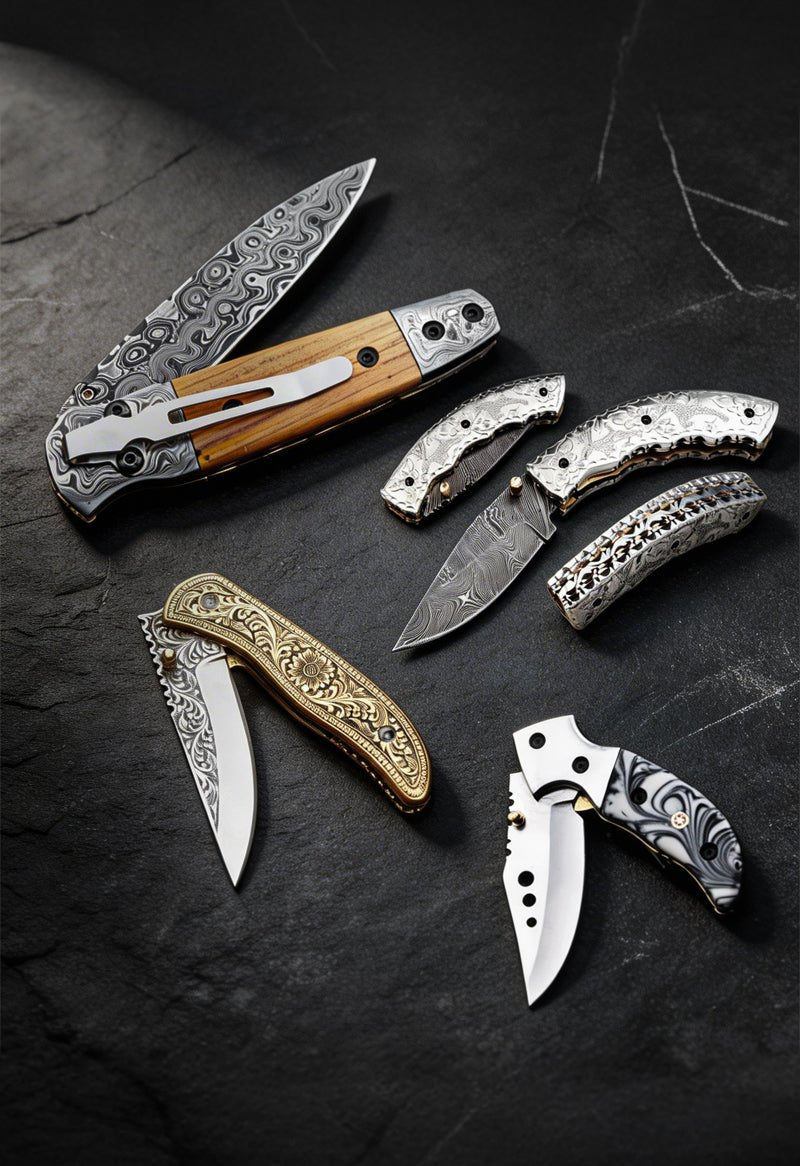
When American ranch heritage meets heirloom-quality pocket knife craftsmanship, you need a blade pattern that has served American farmers, ranchers, and working men for more than one hundred fifty years. JW SteelCrafts Handmade Damascus Stockman Knives honor the quintessential American working pocket knife pattern featuring three specialized blades in one compact handle whether you are a serious rancher continuing the authentic American livestock working tradition, a traditional pocket knife enthusiast appreciating classic American EDC heritage, a serious collector drawn to the most historically significant three-blade folder pattern in American cutlery history, a grandfather passing down traditional pocket knife gifts to grandsons in authentic American family heritage tradition, or a gift-giver searching for a quality folder that connects recipients to American working culture. Each stockman knife is hand-forged from genuine 200-layer high-carbon Damascus steel in the USA, fitted with traditional bone or stag handles and precision slip-joint mechanisms, and finished with authentic American ranch character delivering the kind of classic working folder that generations of American ranchers have trusted, carried, and passed down as treasured family heritage.
The History of Stockman Knives: Classic American Ranch Working Heritage
The stockman knife represents the most historically significant American ranch working pocket knife pattern, with origins tracing back more than one hundred fifty years to the American livestock industry development of the mid-19th century. From Civil War era cattle drive cowboys to modern Western ranchers continuing authentic American livestock traditions, the stockman has earned permanent status as the quintessential American working pocket knife defined by its three specialized blades, slip-joint construction, and distinctive serpentine handle that have remained largely unchanged across more than a century and a half of continuous production.
American Livestock Industry Origins
The stockman knife category emerged during the mid-19th century American livestock industry development, as American cattle ranchers across the expanding Western frontier needed specialized pocket knives capable of handling the diverse cutting tasks required by professional livestock work. The three-blade stockman configuration specifically engineered combined blades for general utility work (clip point), safe cutting without piercing risk (sheepsfoot), and specialized livestock applications including castration and branding work (spey blade). This purpose-designed three-blade system distinguished the stockman from earlier general-purpose pocket knife patterns.
Civil War Era and Cattle Drive Culture
The post-Civil War era from 1865 through 1900 established the legendary American cattle drive culture that drove massive expansion of stockman knife use across the American West. Cowboys driving longhorn cattle from Texas to Kansas railheads along the Chisholm Trail, Western Trail, and other historic cattle drive routes carried stockman knives as essential daily working tools for castration during roundups, hide branding operations, horse tack maintenance, meal preparation during long drives, and the full range of practical cutting tasks that defined professional cowboy work during this foundational era of American ranching culture.
Case Cutlery and the Modern Stockman Pattern
Case Cutlery founded in 1889 established the modern stockman knife standard through faithful production of the classic three-blade pattern that remains the industry benchmark today. The Case stockman became the quintessential American ranch pocket knife during the 20th century, with the Case Russlock, Case Trapper, and especially the Case stockman patterns becoming cultural icons of American working heritage. Case continues to produce stockman knives today, and vintage Case stockman knives from the early 20th century remain among the most collectible American pocket knives in existence.
American Pocket Knife Manufacturing Golden Age
The American pocket knife manufacturing golden age from 1890 to 1950 saw every major American cutlery manufacturer produce stockman knives alongside their other pocket knife lines. Camillus Cutlery, Schrade Cutlery, Imperial Knife Company, Robeson Cutlery, Remington Cutlery, Winchester Repeating Arms, and dozens of other American manufacturers produced millions of stockman knives during this period for American ranchers, farmers, workers, and everyday carriers. The stockman became so thoroughly embedded in American working culture that nearly every American man of this era carried either a stockman or a related multi-blade folder as essential daily equipment.
Modern Stockman Revival and Collector Market
The modern stockman knife revival began in the 1980s and 1990s as traditional pocket knife enthusiasts, Western heritage collectors, and ranch culture preservationists renewed interest in classic American working knife designs. Case Cutlery continued traditional stockman production throughout the modern era, while Great Eastern Cutlery founded in 2006 drove premium stockman revival through faithful reproductions of vintage patterns. Modern custom knife makers producing hand-forged stockman knives serve collectors and working ranchers worldwide who appreciate authentic American heritage pocket knife craftsmanship.
What is a Stockman Knife?
A stockman knife is a classic American three-blade folding pocket knife featuring the distinctive combination of clip point, sheepsfoot, and spey blades in a serpentine or regular equal-end handle, slip-joint construction, and traditional natural handle materials that have defined the pattern since the mid-19th century. Unlike single-blade folding knives or two-blade trappers, the stockman three-blade configuration provides specialized capability across the diverse cutting tasks required for livestock work and general ranch use the clip point handles general utility and piercing work, the sheepsfoot provides safe cutting without piercing risk ideal for cordage and detail work, and the spey blade specifically engineered for livestock castration and branding work provides the specialized functionality that defined the stockman as the quintessential American ranch pocket knife. Stockman knives typically measure 3.5 to 4.25 inches closed length, feature nickel silver bolsters and liners, use slip-joint spring mechanisms without positive locks, and incorporate premium natural handle materials including jigged bone, stag antler, rosewood, and mother-of-pearl. From post-Civil War cattle drive cowboys and American frontier ranchers to modern Western ranchers and traditional pocket knife enthusiasts, the stockman has proven itself as the single most historically significant and culturally influential American ranch working pocket knife pattern across more than one hundred fifty years of continuous production.
Why Choose a JW SteelCrafts Damascus Stockman Knife?
Every blade in our Stockman Knives Collection is individually hand-forged by skilled American artisans using 200+ layers of high-carbon Damascus steel, hardened to 55-58 HRC on the Rockwell scale, with meticulous attention to authentic traditional stockman proportions, precision three-blade pivot assembly, and the distinctive serpentine handle characteristics that define the pattern since the mid-19th century. This labor-intensive process delivers exceptional edge retention across all three blades, structural strength through the critical multiple pivot assembly, authentic American ranch pocket knife character, and the signature flowing Damascus pattern that elevates every stockman into a true collector-grade heirloom piece worthy of the authentic American working heritage. While mass-produced stockman knives from brands like Case Cutlery, Great Eastern Cutlery, Boker, Buck Knives, or Rough Rider rely on CNC machinery and automated assembly, our stockman knives are shaped by hand fire, hammer, slip-joint spring tempering, and decades of accumulated traditional pocket knife making skill creating classic American heritage blades fit to be carried daily by working ranchers and treasured by serious collectors.
Stockman Knife Specifications
Every JW SteelCrafts stockman knife is built to exacting specifications for optimal performance, authentic character, and heirloom-quality durability. The following specifications represent our standard production custom orders with modified configurations are available upon request.
Stockman Knife Styles and Pattern Variations
Our stockman knife collection honors the major traditional variations that have evolved from the mid-19th century American ranch pattern across more than a century and a half of continuous production.
Classic Serpentine Stockman
The classic serpentine stockman features the distinctive curved handle profile that has defined the pattern since the mid-19th century, with three specialized blades mounted in the traditional configuration. This is the most historically authentic stockman style and remains the most popular variation among serious collectors and traditional pocket knife enthusiasts.
Regular Equal-End Stockman
The regular equal-end stockman features a straighter handle profile without the serpentine curve, providing a slightly different aesthetic while retaining the classic three-blade configuration. Favored by users who prefer the straight-handled profile over the serpentine curve style.
Premium Stag Stockman
The premium stag stockman features authentic deer or elk antler handles creating one-of-a-kind pieces where no two knives share identical handle appearance. The combination of hand-forged Damascus three-blade stockman construction with premium stag antler handles produces exceptional heirloom collector pieces.
Jigged Bone Stockman
The jigged bone stockman features traditional American pocket knife handle construction using carefully processed cow or buffalo bone with distinctive textured jigging pattern. Jigged bone represents the most traditional stockman handle material, dating back to the earliest production and remaining popular throughout the pattern history.
Mother-of-Pearl Dress Stockman
The mother-of-pearl dress stockman features premium pearl handles creating an elegant refined aesthetic suitable for formal wear and dress carry. These dress stockman knives honor the tradition of pocket knives as both practical tools and gentlemanly accessories across American social history.
Who Needs a Stockman Knife?
Working Ranchers and Western Heritage Enthusiasts value handmade Damascus stockman knives for continuing the authentic American ranch working tradition established during the mid-19th century cattle drive era and refined across more than one hundred fifty years of continuous Western American ranching culture.
Traditional Pocket Knife Enthusiasts appreciate handmade Damascus stockman knives as the quintessential expression of American working pocket knife heritage, representing the perfect balance of mechanical sophistication, historical authenticity, practical three-blade versatility, and heirloom-quality craftsmanship.
Serious Pocket Knife Collectors value Damascus stockman knives as premium collector pieces featuring hand-forged construction, premium natural handle materials, authentic traditional serpentine handle proportions, and connection to the most historically significant American ranch pocket knife pattern.
Fathers and Grandfathers Giving Heritage Gifts choose stockman knives as traditional American heritage gifts for sons and grandsons, continuing the authentic ranch tradition where quality working pocket knives represent coming-of-age moments and family heritage passed from generation to generation of American men.
Working Professionals and EDC Users appreciate the versatile three-blade cutting capability provided by the specialized stockman configuration, with slip-joint construction legal in jurisdictions with locking knife restrictions and traditional aesthetic suitable for office and formal wear environments.
How to Use and Care for Your Damascus Stockman Knife
Our Damascus stockman knives are designed for traditional working pocket knife use and generational durability when properly maintained. After each use, wipe all three blades clean with a dry cloth to remove moisture, dirt, or food residues before closing. Periodically apply a drop of light machine oil to each pivot point to maintain smooth slip-joint action and prevent friction wear across the multiple pivot assemblies common to stockman knives. Apply a light coat of food-safe mineral oil to the blade surfaces periodically to prevent surface rust and preserve the Damascus pattern. For natural handle materials including jigged bone, stag antler, and hardwood, periodic application of handle wax or mineral oil prevents drying and cracking over decades of carry. Store the knife closed when not in use to protect the slip-joint springs and preserve blade sharpness. Hand-sharpen individual blades on a quality whetstone as needed working ranchers typically sharpen the clip point blade most frequently due to its general utility use, while the sheepsfoot and spey blades require less frequent sharpening. With proper care, a hand-forged Damascus stockman will outlast generations of daily carry and become a treasured family ranch heirloom.
Shop with Confidence — JW SteelCrafts Guarantees
Every Damascus stockman knife ships fast from the USA with a lifetime craftsmanship guarantee covering workmanship defects for the entire life of the blade. If your stockman fails due to a manufacturing defect, we will replace or repair it no questions asked. Each stockman arrives in a collector presentation gift box with care instructions, certificate of authenticity, and the quiet confidence that it was forged by hand by American artisans working in a ranch pocket knife tradition that stretches back more than one hundred fifty years to the post-Civil War cattle drive era of American Western heritage.
Browse our complete collection of handmade Damascus stockman knives below. From classic serpentine three-blade patterns and regular equal-end variations to premium stag antler collector pieces, traditional jigged bone working knives, and mother-of-pearl dress stockman knives every piece is one-of-a-kind forged for the working rancher, serious collector, traditional pocket knife enthusiast, or heritage gift-giver who honors the authentic American ranch working tradition.
FAQs