




0 products
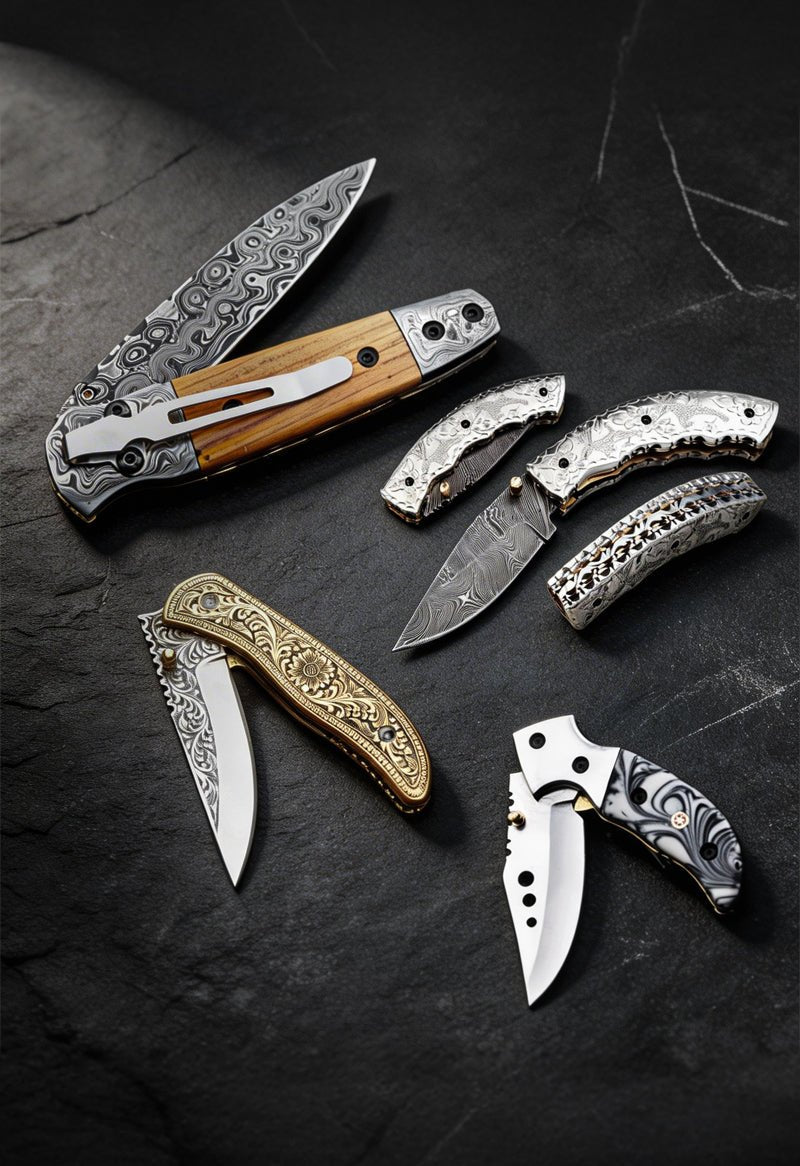
When heritage craftsmanship meets sustainable blade making, you need a knife with a story worth telling. JW SteelCrafts Handmade File Steel Knives transform worn industrial mill files into working heirloom blades through traditional forging methods passed down through generations of American bladesmiths whether you are a bushcrafter seeking a knife with authentic character and unmatched edge retention, a collector drawn to the distinctive aesthetic of file-pattern blades, a sustainability-minded buyer who appreciates material repurposing, a hunter needing a rugged working knife built for the field, or a serious enthusiast who understands that high-carbon file steel represents one of the finest knife-making materials ever developed. Each file steel knife is hand-forged in the USA from reclaimed mill files, individually heat-treated for optimal hardness and toughness, and finished with premium handle materials delivering the kind of distinctive working blade that only recycled industrial file steel can produce.
The History of File Steel Knives: From Industrial Scrap to Heirloom Blades
The tradition of forging knives from worn industrial files represents one of the most authentic and historically significant blade-making practices in American craftsmanship history, with documented origins stretching back more than two hundred years to the earliest American industrial era. From colonial blacksmiths repurposing broken files into working knives for frontier settlers to modern custom knife makers hand-forging file steel blades in traditional coal forges, the file knife tradition embodies the resourceful spirit of American self-reliance, sustainable material use, and generational craftsmanship transmission. File steel knives occupy a unique position in the knife-making world distinguished simultaneously by their humble industrial origins and their reputation for exceptional edge-holding performance that rivals or exceeds many premium specialty blade steels.
Colonial American Blacksmiths and Frontier Blade Making
The American tradition of forging knives from worn industrial files began during the colonial era of the 17th and 18th centuries, when frontier blacksmiths faced constant material shortages and developed sophisticated techniques for repurposing worn tools into working blades. Colonial blacksmiths understood that worn mill files contained some of the highest-quality steel available to them typically 1095 or W1 tool steel with 1% carbon content that made excellent blade material when properly heat-treated. These colonial file knives served as essential tools for farmers, hunters, trappers, and settlers across the American frontier, with surviving examples preserved today in historical museums including Colonial Williamsburg, the Smithsonian American History Museum, and various regional historical societies across the Appalachian region.
The Industrial Revolution and American File Manufacturing
The American industrial revolution of the 19th century established the United States as a global center of file manufacturing, with companies like Nicholson File Company founded in 1864 in Providence Rhode Island, Simonds Manufacturing Company founded in 1832 in Fitchburg Massachusetts, and Heller Brothers Company producing millions of high-quality mill files annually for industrial use across American manufacturing. These American-made files were manufactured from premium high-carbon steels including 1095, W1, W2, and various proprietary tool steel formulations specifically engineered for cutting performance and edge durability under demanding industrial conditions. When these industrial files reached the end of their primary useful life, resourceful bladesmiths across America developed the practice of reclaiming them for knife making a tradition that has continued unbroken for more than one hundred fifty years.
Appalachian Mountain Tradition and Family File Knife Making
The Appalachian mountain regions of Kentucky, Tennessee, North Carolina, West Virginia, and Virginia developed particularly strong file knife traditions during the 19th and early 20th centuries, with mountain families passing down specialized file knife making techniques from grandfather to father to son across multiple generations. Mountain blacksmiths in these regions developed signature file knife styles characterized by hand-forged bolsters, carved wood handles made from local Appalachian hardwoods including walnut and hickory, and distinctive edge geometries optimized for the hunting, farming, and daily utility needs of mountain communities. These Appalachian file knives remain highly collectible today, with authentic hand-forged examples from established mountain family makers commanding premium prices at specialty knife shows and antique auctions.
World War II and the American File Knife Resurgence
World War II drove massive American industrial expansion that resulted in enormous quantities of worn industrial files being generated by wartime manufacturing operations across the United States. American servicemen stationed in training camps and overseas deployment locations frequently commissioned local blacksmiths to forge personal knives from worn mill files, creating thousands of custom file knives that returned home with soldiers as cherished personal possessions. The post-war era saw many of these returning servicemen take up amateur knife making as a hobby, often starting with file steel as their first blade material because of its accessibility, affordability, and the connection to traditional American craftsmanship. This post-war amateur knife making boom established the modern American custom knife community that continues to drive innovation and tradition preservation today.
Modern Custom File Knife Renaissance
The modern American custom file knife renaissance began in the 1970s and 1980s when traditional blacksmithing experienced a widespread cultural revival driven by growing interest in sustainable craftsmanship, back-to-the-land movements, and renewed appreciation for authentic American material culture. Master bladesmiths including Daryl Meier, Wayne Goddard, and Tim Lively documented and popularized traditional file knife making techniques through influential books, magazine articles, and workshop instruction that trained a new generation of American file knife makers. Today, the file knife tradition continues through established knife making schools, custom knife maker organizations like the American Bladesmith Society founded in 1976, and specialty manufacturers who honor this centuries-old American craft tradition by producing hand-forged file knives using authentic traditional methods.
What is a File Steel Knife?
A file steel knife, also commonly called a rasp knife, forge-file knife, or file knife, is a working blade hand-forged from reclaimed industrial mill files or rasps that have reached the end of their primary useful life as metalworking tools. Unlike blades forged from purchased bar stock or billet steel, file steel knives begin as worn industrial files typically made from high-carbon tool steels including 1095, W1, W2, or proprietary file steel formulations with carbon content ranging from 0.95% to 1.25% that produce blades with exceptional hardness, outstanding edge retention, and distinctive aesthetic character that often preserves portions of the original file tooth pattern as decorative elements on the finished blade. The file knife making process requires skilled traditional blacksmithing techniques including proper annealing to soften the original file for shaping, forge welding and drawing out to achieve the desired blade geometry, precise heat treatment to achieve optimal hardness while preserving toughness, and traditional hand finishing to produce the distinctive working aesthetic that collectors and users prize. From colonial frontier blacksmiths and Appalachian mountain traditions to WWII military forges and modern custom makers, the file knife represents one of the most authentic and sustainable American blade-making traditions in continuous use for more than two centuries.
Why Choose a JW SteelCrafts File Steel Knife?
Every blade in our File Steel Knives Collection is individually hand-forged by skilled American artisans using reclaimed high-carbon industrial mill files, hardened to 58-62 HRC on the Rockwell scale, with meticulous attention to traditional forging techniques, authentic hand finishing, and the preservation of distinctive file steel character throughout the final blade. This labor-intensive traditional process delivers exceptional edge retention that often exceeds modern production blades, structural durability built from premium tool steels engineered for cutting performance, authentic aesthetic character that no CNC-produced blade can replicate, and the unique environmental credentials of true material repurposing. While mass-produced knives from brands like Buck, Case, Gerber, Cold Steel, or Ontario rely on purchased steel billets processed through automated manufacturing, our file steel knives are shaped by hand coal forge, hammer, water quench, and generations of accumulated traditional American blacksmithing knowledge creating working blades that honor the heritage of American frontier craftsmanship while delivering the kind of exceptional performance that only authentic hand-forged tool steel can provide.
File Steel Knife Specifications
Every JW SteelCrafts file steel knife is built to exacting traditional specifications for optimal cutting performance, authentic aesthetic character, and heirloom-quality durability. The following specifications represent our standard file knife production custom orders with modified blade styles, handle configurations, and file steel source selections are available upon request for collectors and specialized applications.
File Steel Knife Styles and Design Traditions
Our file steel knife collection honors the major regional and historical traditions that have shaped American file knife making over two centuries of continuous craftsmanship. Understanding these styles helps you select the right file knife for your intended use and aesthetic preferences.
Classic Appalachian Mountain Knife
The classic Appalachian mountain file knife features a modest 5 to 6 inch blade with pronounced belly curve, hand-forged brass bolster, and traditional handle made from local Appalachian hardwoods like walnut or hickory. This style reflects the practical working knife tradition developed by mountain blacksmiths across Kentucky, Tennessee, North Carolina, West Virginia, and Virginia over generations of family blade making. Our Appalachian-style file knives honor this heritage with authentic traditional proportions and hand-finished detail work.
Frontier Hunting Knife
The frontier hunting file knife features a longer 7 to 9 inch clip-point or drop-point blade optimized for field dressing large game, processing meat, and heavy outdoor work. These knives trace their roots to 19th century American frontier hunters who commissioned local blacksmiths to forge working hunting blades from reclaimed files. Our frontier hunting file knives combine authentic American design heritage with reliable field performance for modern hunters and outdoor enthusiasts.
Bowie-Style File Knife
The Bowie-style file knife features a dramatic clip-point blade typically 8 to 10 inches long with pronounced false edge and substantial handle, inspired by the legendary Bowie knife tradition established by Jim Bowie in the 1830s. These larger file knives serve both as working blades and as display pieces appreciated for their imposing presence and connection to American frontier mythology. Our Bowie-style file knives honor this iconic American tradition with authentic proportions and hand-forged construction.
Skinner and Caper File Knife
The skinner and caper file knife features a shorter 4 to 5 inch blade with pronounced upswept belly specifically engineered for field dressing and skinning game animals. The combination of high file steel hardness and the specialized skinner geometry produces exceptional performance for hunters who demand both edge retention and precision cutting control during game processing. Our skinner-style file knives are favored by serious hunters who process their own game across multiple hunting seasons.
Camp and Bushcraft File Knife
The camp and bushcraft file knife features a robust 5 to 7 inch blade with full tang construction optimized for shelter construction, firewood processing, cordage cutting, and the full range of wilderness survival tasks. These knives serve as reliable primary blades for serious bushcrafters, campers, and wilderness survival enthusiasts who need a working knife capable of handling sustained outdoor use. Our bushcraft file knives honor the practical American working knife tradition with modern wilderness performance.
Who Needs a File Steel Knife?
Hunters and Outdoorsmen value handmade file steel knives for their exceptional edge retention through extended field use, authentic working knife character that mass-produced blades cannot replicate, and the connection to generations of American hunting knife tradition that defines the file knife category.
Bushcrafters and Wilderness Enthusiasts appreciate file steel knives for their rugged durability under sustained outdoor use, superior cutting performance from premium high-carbon tool steel, and the authentic hand-forged character that appeals to serious wilderness practitioners who respect traditional craftsmanship.
Collectors and Historical Enthusiasts value file steel knives for their distinctive aesthetic character often featuring preserved file tooth patterns as decorative accents, authentic American craftsmanship heritage spanning more than two centuries, and the increasing scarcity of true hand-forged file knives in the modern production-dominated knife market.
Sustainability-Minded Buyers choose file steel knives because they represent genuine material repurposing that reclaims worn industrial files from the waste stream and transforms them into heirloom-quality working tools, supporting both environmental responsibility and traditional American craftsmanship simultaneously.
Knife Making Enthusiasts and Blacksmithing Students study file steel knives as examples of traditional American blade-making techniques, with hand-forged file knives serving as both inspiration and reference points for amateur and professional knife makers learning the authentic craft methods passed down through generations of American blacksmiths.
How to Care for Your File Steel Knife
Our file steel knives are designed for working performance and multi-generational durability when properly maintained. High-carbon file steel offers exceptional edge retention but requires more diligent care than stainless steel because it will develop rust spots if left wet or exposed to acidic foods for extended periods. After each use, wipe the blade clean with a dry cloth to remove any moisture, blood, sap, or food residues. Apply a light coat of food-safe mineral oil or specialized blade oil periodically to prevent surface oxidation and preserve the hand-forged finish. Store in the included leather sheath or on a magnetic rack away from humidity and extreme temperature variations. When sharpening, use a quality whetstone or honing rod the hard file steel will take and hold an exceptionally sharp edge with occasional maintenance. Many file steel knife owners develop and appreciate the gentle patina that forms on the blade surface over years of use this natural darkening actually provides some additional corrosion protection and reflects the authentic working character of traditional American carbon steel blades. With proper care, a hand-forged file steel knife will outlast generations of hard use and become a treasured family heirloom passed from parent to child, hunter to hunter, generation to generation.
Shop with Confidence — JW SteelCrafts Guarantees
Every file steel knife ships fast from the USA with a lifetime craftsmanship guarantee covering workmanship defects for the entire life of the blade. If your knife fails due to a manufacturing defect, we will replace or repair it no questions asked. Each file knife arrives with a hand-tooled leather sheath, care instructions, certificate of authenticity, and the quiet confidence that it was forged by hand from reclaimed American mill file steel by American artisans working in a traditional blade-making heritage that stretches back more than two hundred years to the colonial frontier.
Browse our complete collection of handmade file steel knives below. From classic Appalachian mountain working blades and frontier hunting knives to Bowie-style file blades, dedicated skinners, and modern bushcraft designs every piece is one-of-a-kind forged from reclaimed industrial files for the person who refuses to settle for stamped production work and values the authentic character of traditional American craftsmanship.
FAQs